Wire cutter
A wire cutter is a tool that cuts with a long stretched wire by moving it (generatrix) along a space curve (directrix), creating a very wide ruled surface. Ruled surface are the most used surface in classical stereotomy for its swift transfer of geometric information into the stone cutting process (Frézier, 1738).
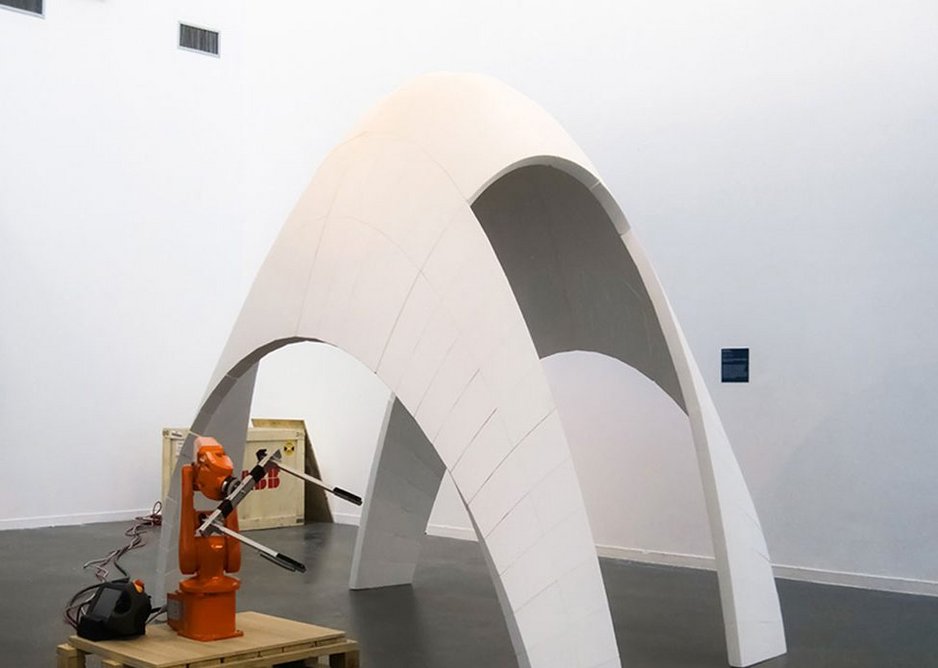
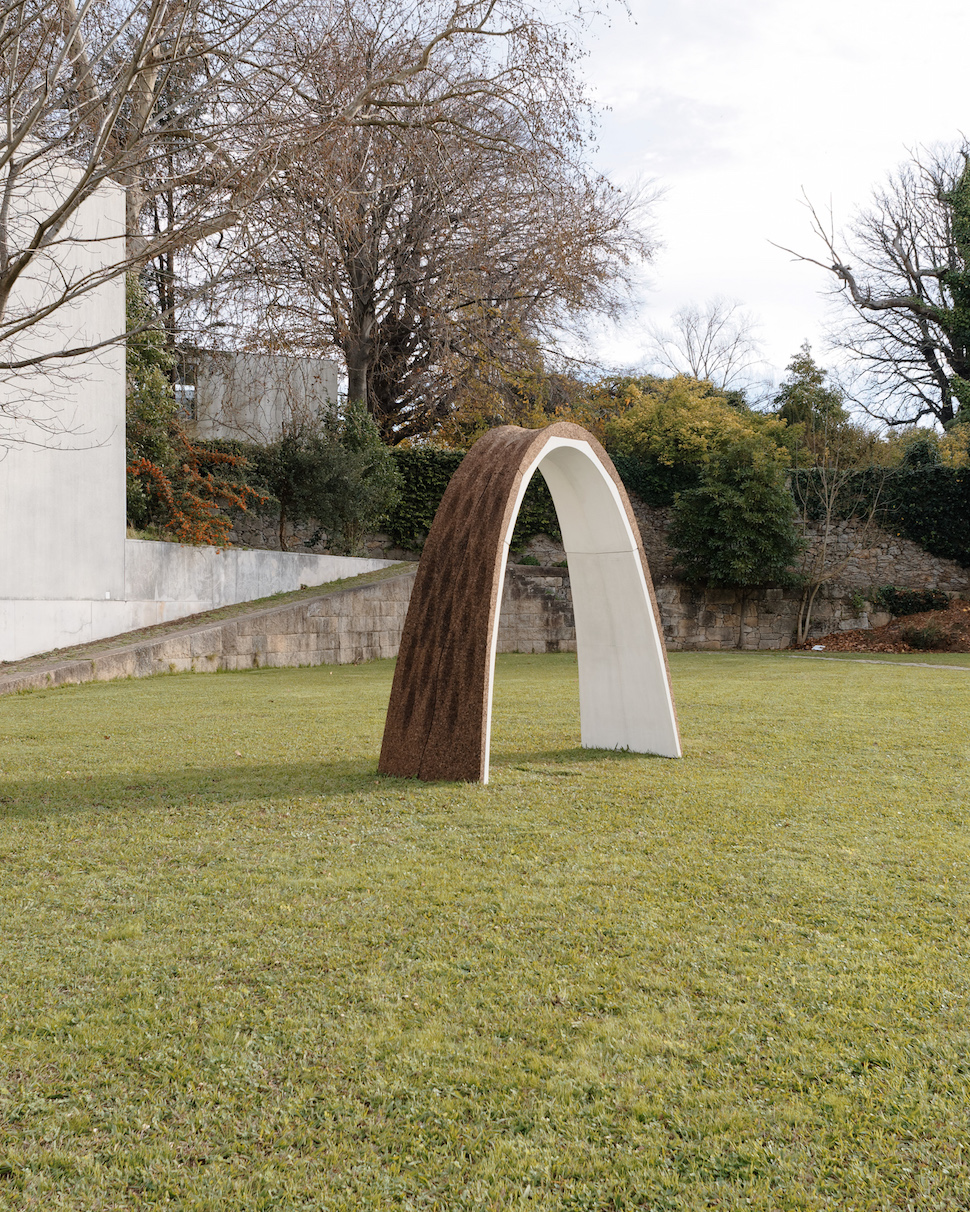
By using RHWC (Robotic Hot Wire Cutting), large blocks of EPS may be cut with quick and precise actions, producing geometrically accurate voussoirs ready for assembly. To compensate for the incompatible lightness of EPS with the compressive nature of stereotomy, the studio Matter Design used tension cables to provide for compression in a 18 meter high EPS tower (McGee et al., 2013). Another way to take advantage of RHWC for stereotomy is to fabricate EPS moulds for casting in a heavy material such as concrete. In the Corkcrete Arch project (Sousa and Martins, 2016), the mould had their main intrados surface cut by RHWC, resulting in a quick operation with smooth finish.
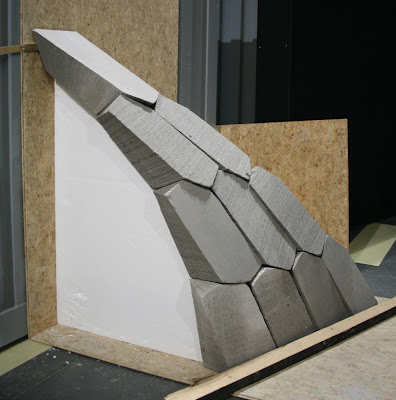
Another type of implementation of this base technology is RDWC (Robotic Diamond Wire Cutting), inwhichadiamondimpregnatedwireusuallysuitedforcuttingstraightplanesinlargeblocks of stone, is mounted on a robotic arm. This allows for a high degree of freedom of cutting ruled surfaces in hard materials such as stone, and it also potentially creates opportunities for material savings as in the HyparVault, where identical voussoirs are cut from a block as if they were already stacked inside it.
Works featuring this facet:


Facets:
Posted
by