Computerized model
A computerized model is developed in a similar way a design is produced in paper. The designer has a clear idea of the end result, and creates the necessary elements to achieve this result by inputing them individually (at least by type) in the computer. For example, a hemispheric dome might be started with a 1) sphere which is 2) cut in half, 3) a profile is divided in equal parts, 4) the dome surface is intersected with horizontal planes passing through the division points in 3), 5) each of the curves resulting 6) are divided once again, etc. All these action are possible to be carried out in paper using projections, and the computer eases the process by automating and speeding certain actions, e.g., dividing a curve in equal parts, as well as providing for a 3D model to be worked on and from where to retrieve information, e.g., quantities, sizes, angles, projections. Advantages of this system rely in the added speed of design and accuracy, while still being able to generate a large number of different elements with simple operations.
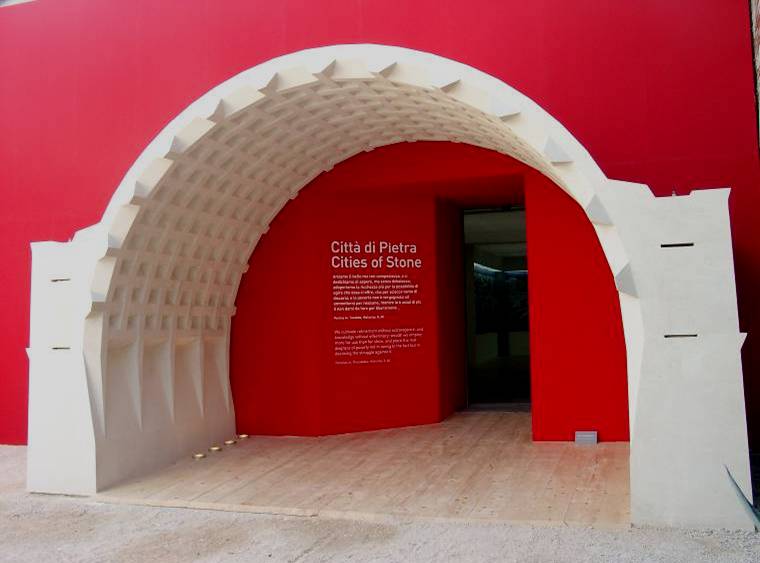
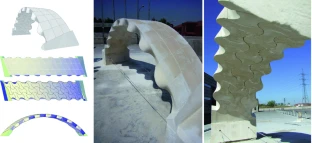
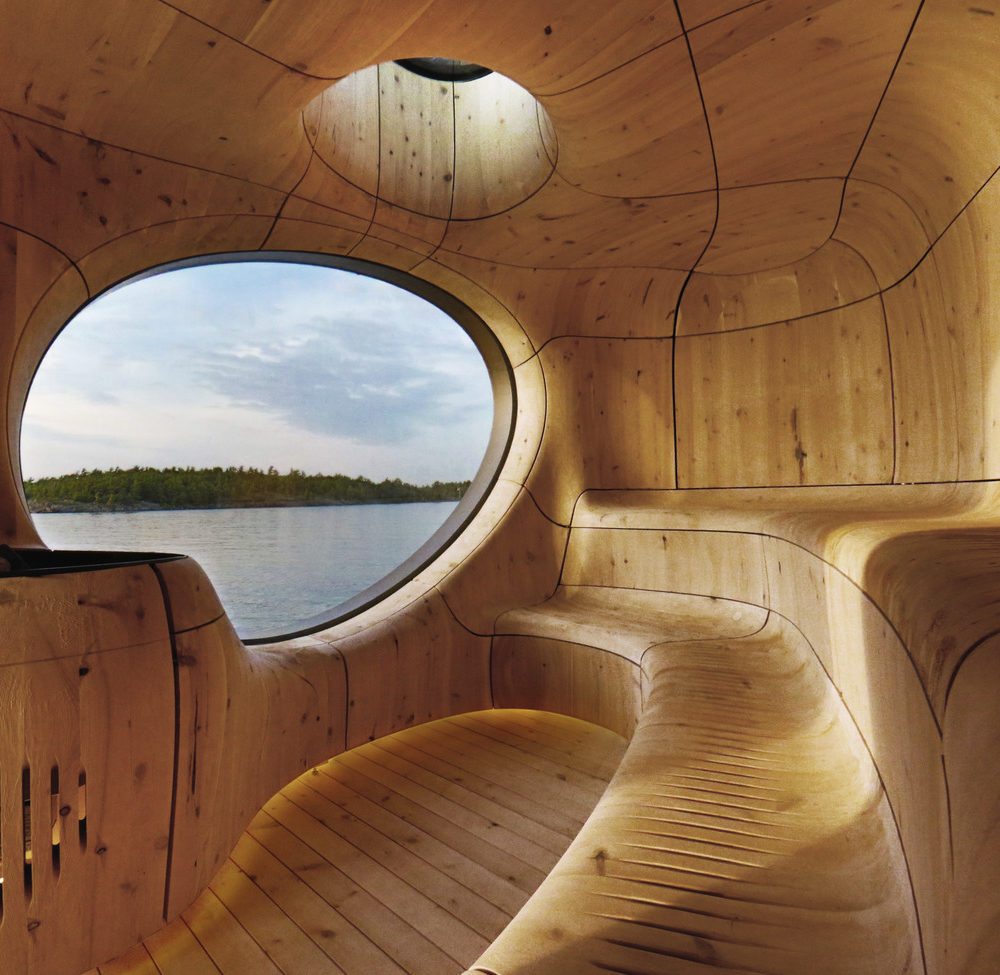
Works featuring this facet:
Facets:
Posted
by