Notice: Function _load_textdomain_just_in_time was called incorrectly. Translation loading for the acf domain was triggered too early. This is usually an indicator for some code in the plugin or theme running too early. Translations should be loaded at the init action or later. Please see Debugging in WordPress for more information. (This message was added in version 6.7.0.) in /home4/rucativa/public_html/ssc2.pedroazambujavarela.net/wp-includes/functions.php on line 6170
Planar (Intrados and Extrados Surface) – Stereotomy Semantic Classification

Planar (Intrados and Extrados Surface)

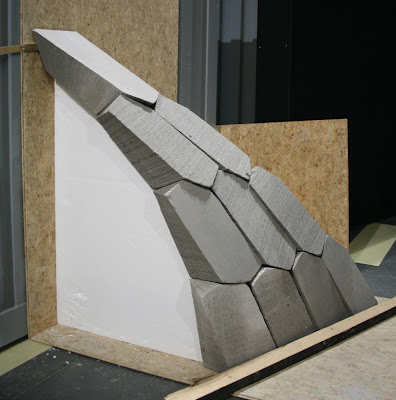
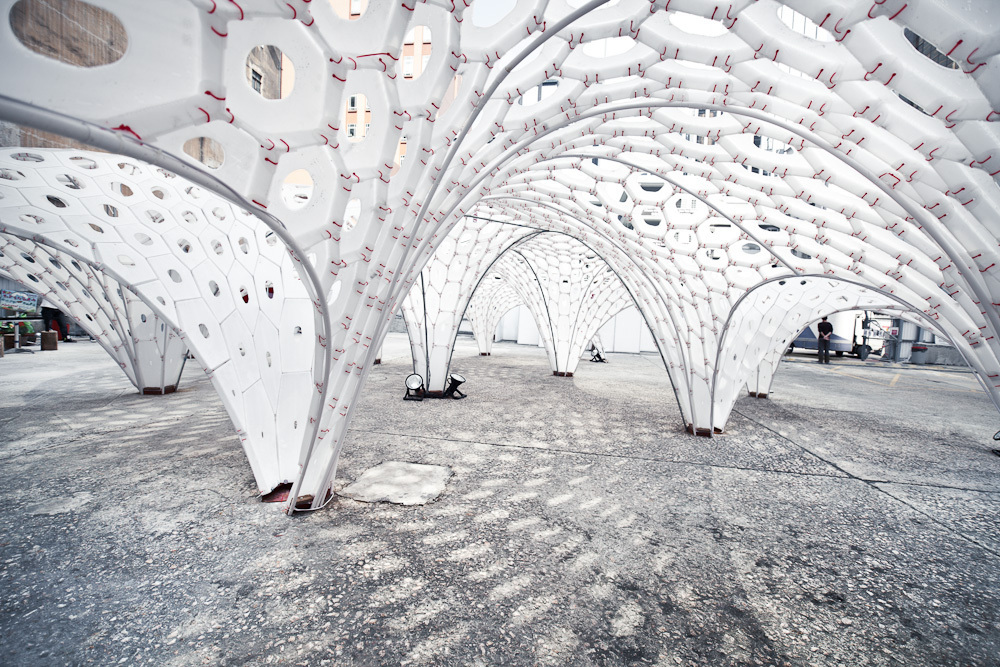
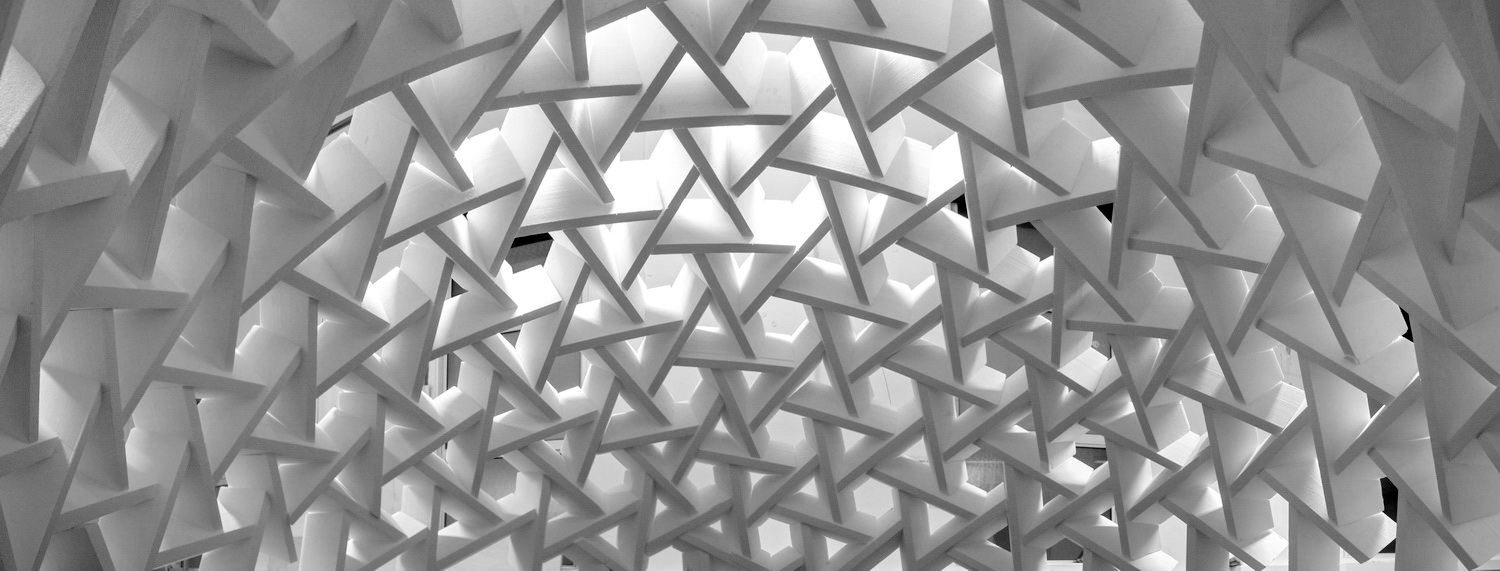
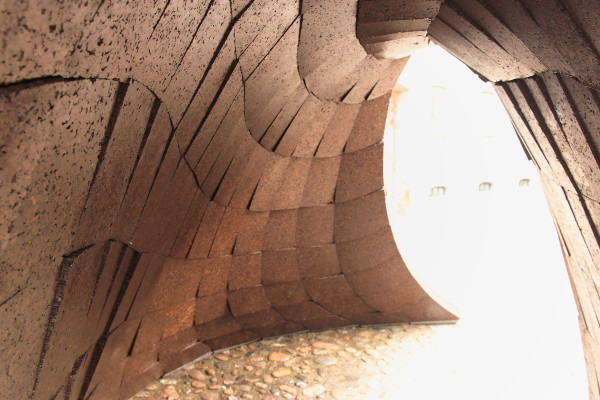
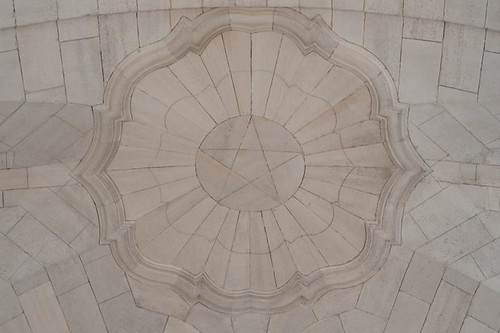
Planar or flat intrados are often the product of straightforward materialisation processes that obviate efforts from aesthetic finishing of the intrados surface and concentrates efforts in the definition of the contact surfaces (see Contact surface ).

Various materialisation processes do not favour the modelling of the underside, the voussoir surface in which the raw material is fixed to the working table – examples of this limitation include, among other, milling, circular sawing or material extrusion. In the case of milling or circular sawing, it is necessary to flip the block for a different milling session; material extrusion is dependent on a previous mould replicating the intrados surface in which the additive material shall be deposited.

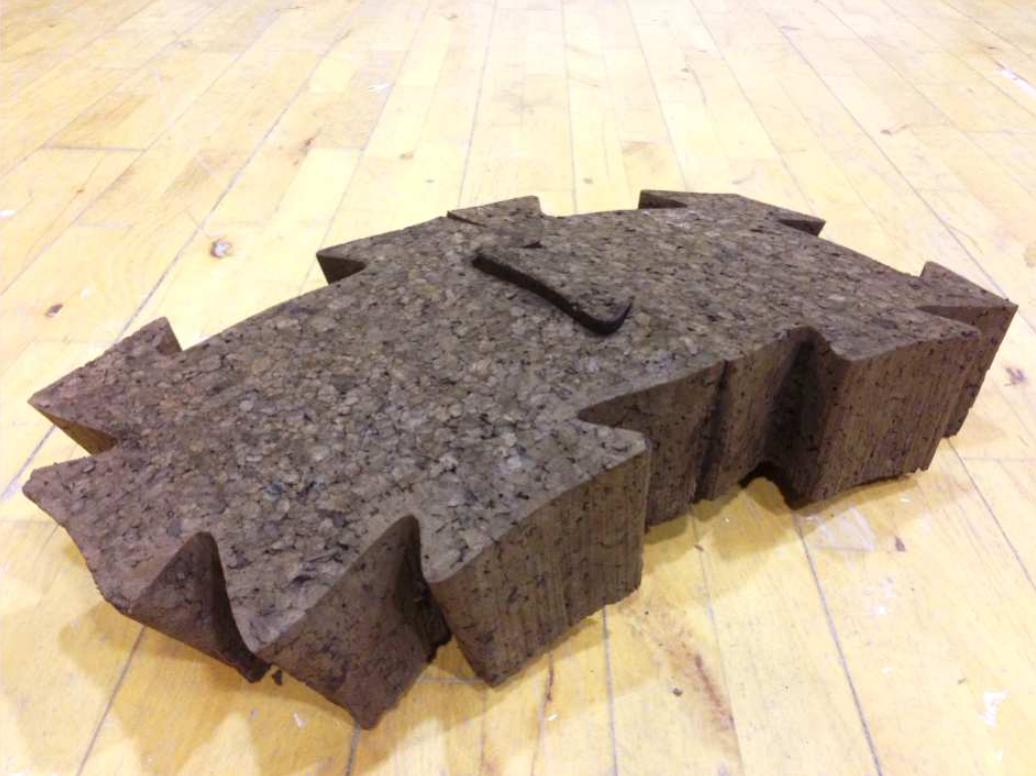
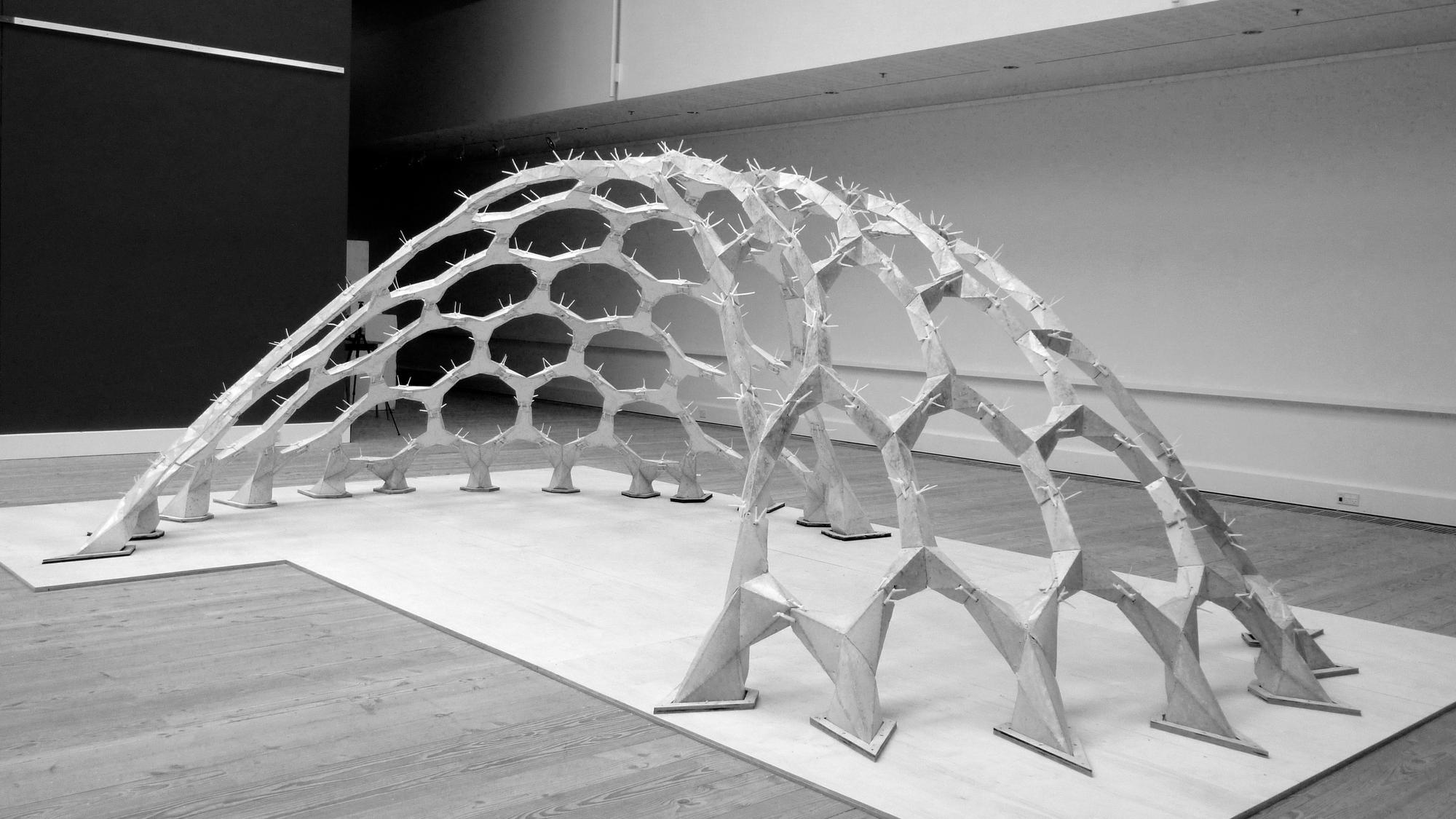
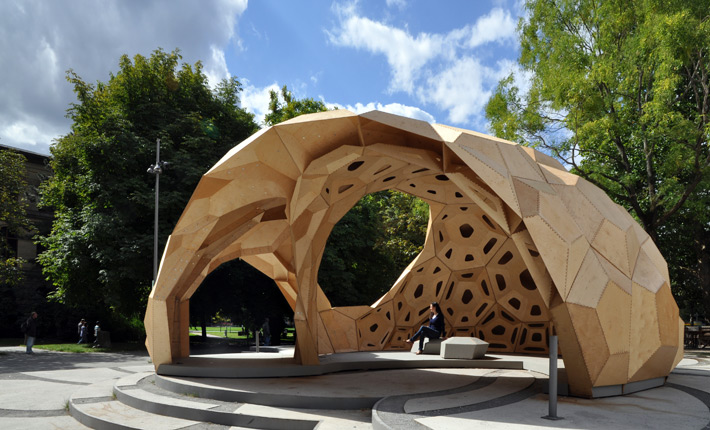
Adding to the fact that the large majority of solid raw materials are obtainable from the producer as cuboid stock materials; that stereotomic bond is essentially dependent on the geometric accuracy of the contact surfaces; and that accessible computation allow for a feasible planar form finding (see Figure 108), this kind of intrados (or extrados) has been widely used to materialize stereotomy (Azambuja Varela and Merritt, 2016), (Kaczynski et al., 2011), (Matthias Rippmann et al., 2016), (Azambuja Varela and Sousa, 2018)). Planarized configurations can be optimized by computer iterative processes that search for a solution of coincident intrados adjacent edges by slightly moving intrados vertices around the initial point; depending on the gaussian curvature and the magnitude of the principal curvature, a solution might not be feasible and a scaling effect appears, stressing the individuality of each voussoir.

Facets:

Show all Semantics
  • E Equilibrium

    • EA Macro-shape

      • EAA Generation method

        • EAAA Top down

          • EAAAA Constant generatrix

          • EAAAB Varying generatrix

        • EAAB Bottom up

          • EAABA Hanging models

          • EAABB Graphic statics

      • EAB Continuity

        • EABA Segmented

        • EABB Continuous

    • EB Structural functioning

      • EBA Compression only

      • EBB Compression and tension

        • EBBA Tension resistant voussoirs

        • EBBB External reinforcement

      • EBC Tension only

    • EC Surface subdivision

      • ECA One level subdivision

        • ECAA Pattern

          • ECAAA Periodic

            • ECAAAA Developable

            • ECAAAB Constant principal curvature

          • ECAAB Non-periodic

            • ECAABA Topological approach

              • ECAABAA Regular

              • ECAABAB Semi regular

            • ECAABB Space filling polygons

        • ECAB Performative subdivision

          • ECABA Curvature

          • ECABB Aesthetics

          • ECABC Voussoir dimensions

      • ECB Multiple level subdivision

        • ECBA Courses and voussoirs

        • ECBB Micro voussoirs within macro voussoirs

    • ED Foundation

      • EDA Site fixation

        • EDAA Pre-existing static base

        • EDAB Purposed static base

        • EDAC Tensioned springers

        • EDAD Wall or lintel supports

      • EDB Springer

        • EDBA Materiality

          • EDBAA Same as voussoir

          • EDBAB Different material

        • EDBB Geometry

          • EDBBA Subdivision continuity

          • EDBBB Specific design

  • T Tomotechny

    • TA Materialisation Processes

      • TAA Subtractive

        • TAAA 2D cut

          • TAAAA Milling (2D cut)

          • TAAAB Laser

        • TAAB 3D cut

          • TAABA Milling (3D cut)

          • TAABB Saw (3D cut)

          • TAABC Wire cutter

          • TAABD Water jet

        • TAAC 3D carve

          • TAACA Chisel and Mallet

          • TAACB Milling (3D carve)

          • TAACC Saw (3D carve)

      • TAB Additive

        • TABA Material extrusion

        • TABB Binder jetting

      • TAC Formative

        • TACA One-off Mould

        • TACB Reconfigurable Mould

    • TB Centering

      • TBA Temporary

        • TBAA Support structure below

          • TBAAA Extruded grid

          • TBAAB Per-Voussoir

          • TBAAC Along lines

        • TBAB Tensioned voussoirs above

      • TBB Permanent

      • TBC Inexistent (Centering)

        • TBCA Self supported

        • TBCB Additionally supported

    • TC Technical drawing method

      • TCA Two dimensional drafting

        • TCAA Trait

        • TCAB Descriptive geometry

      • TCB Three dimensional modelling

        • TCBA Computerized model

        • TCBB Computational model

  • V Voussoirs

    • VA Material

      • VAA Sustainability

        • VAAA Extraction

        • VAAB Transportation

        • VAAC Processing

        • VAAD Fabrication

      • VAB Structural performance

        • VABA Compression

        • VABB Tension

        • VABC Density

      • VAC Material Typology

        • VACA Subtractable materials

        • VACB Formable materials

        • VACC Additive materials

    • VB Intrados and Extrados

      • VBA Surface

        • VBAA Double Curvature

        • VBAB Single Curvature

        • VBAC Planar (Intrados and Extrados Surface)

        • VBAD Textured

      • VBB Perimeter

        • VBBA Concavity

          • VBBAA Convex

          • VBBAB Concave

        • VBBB Correspondence

          • VBBBA Analogous

          • VBBBB Differentiated

    • VC Contact surface

      • VCA Geometry

        • VCAA Ruled

        • VCAB Planar (Contact Surface)

        • VCAC Composite

      • VCB Friction

        • VCBA Smooth

        • VCBB Rough

      • VCC Mortar

        • VCCA Inexistent (Mortar)

        • VCCB Gap filling

        • VCCC Binding

      • VCD Interlock

        • VCDA Alignment

        • VCDB Sliding prevention

        • VCDC Cantilevering


Posted

by